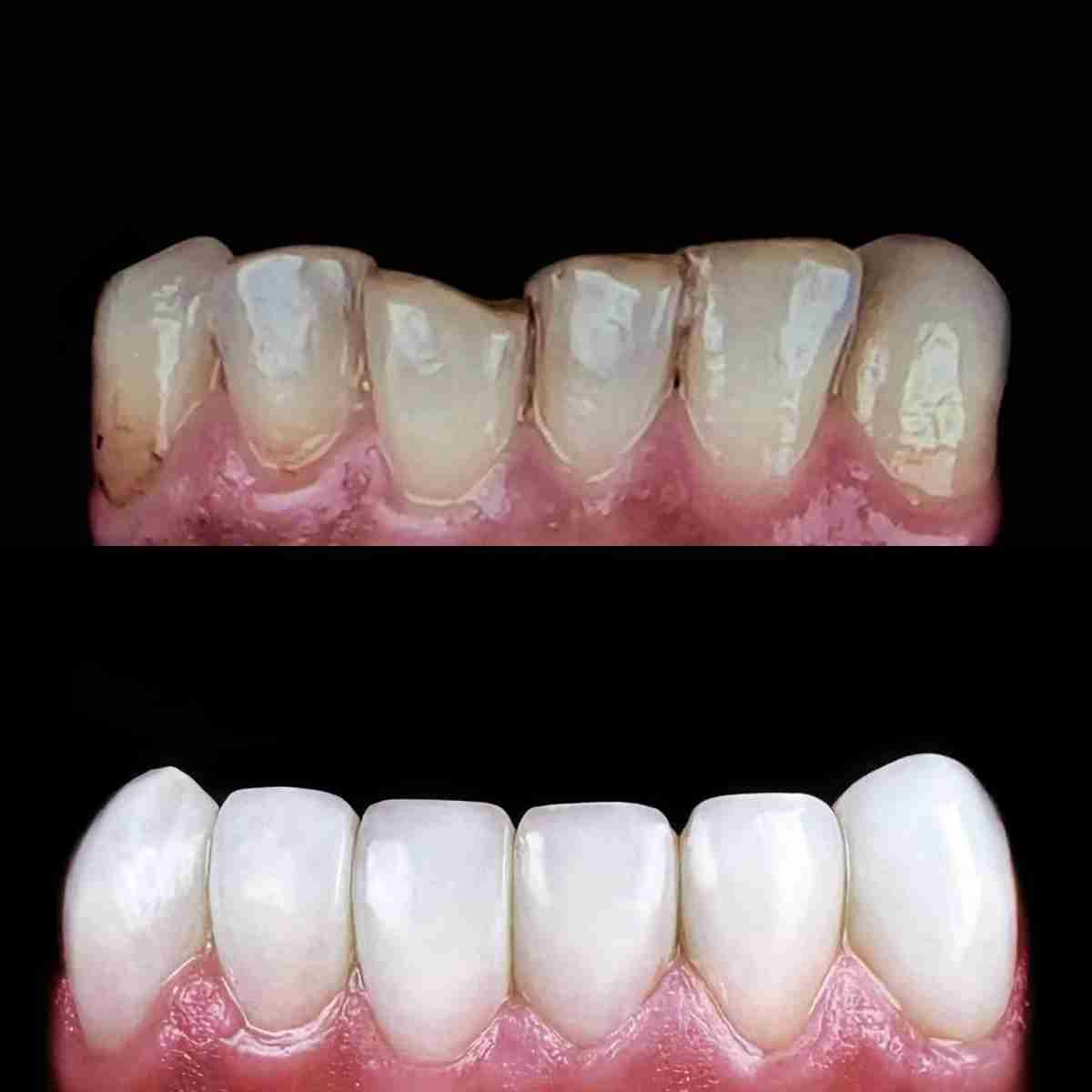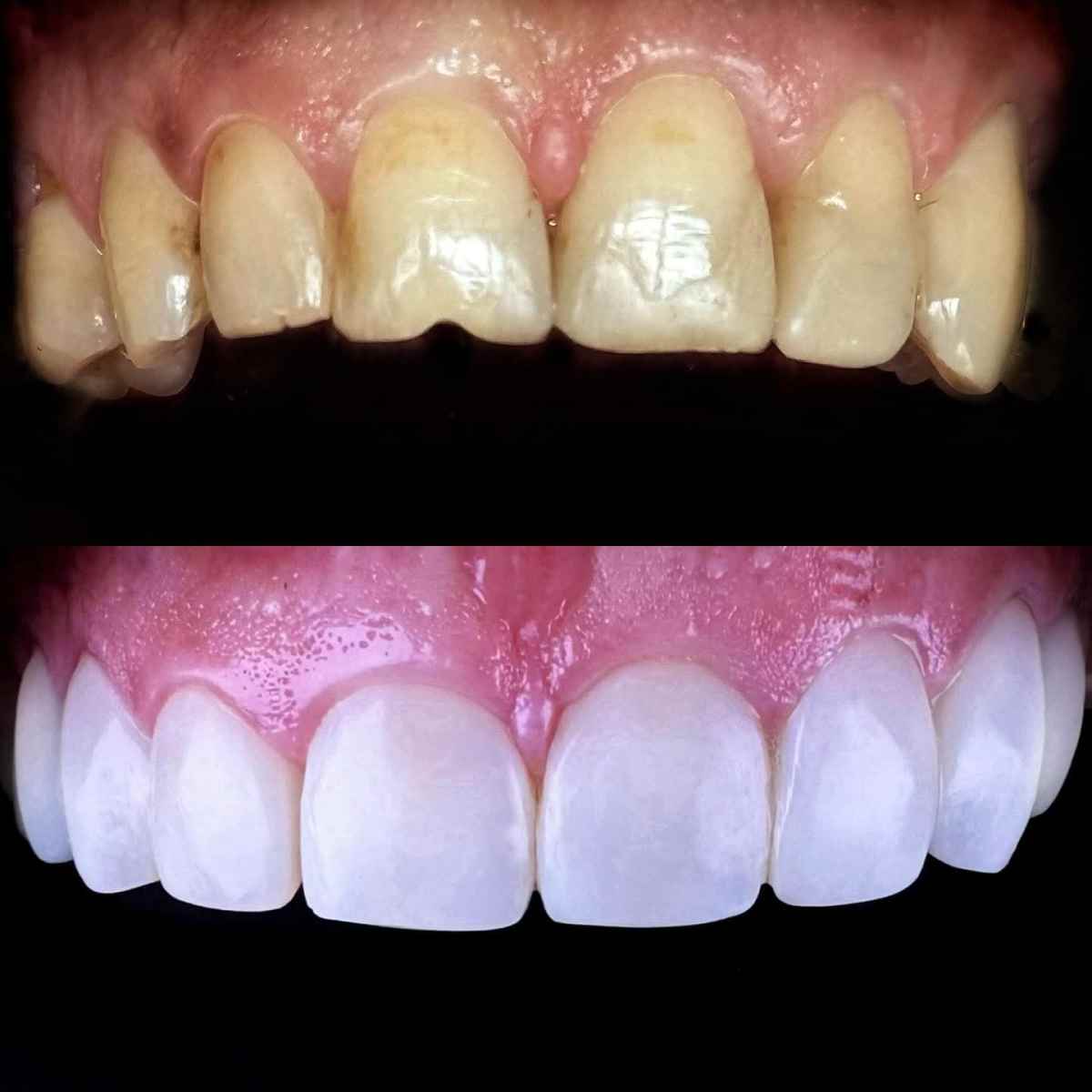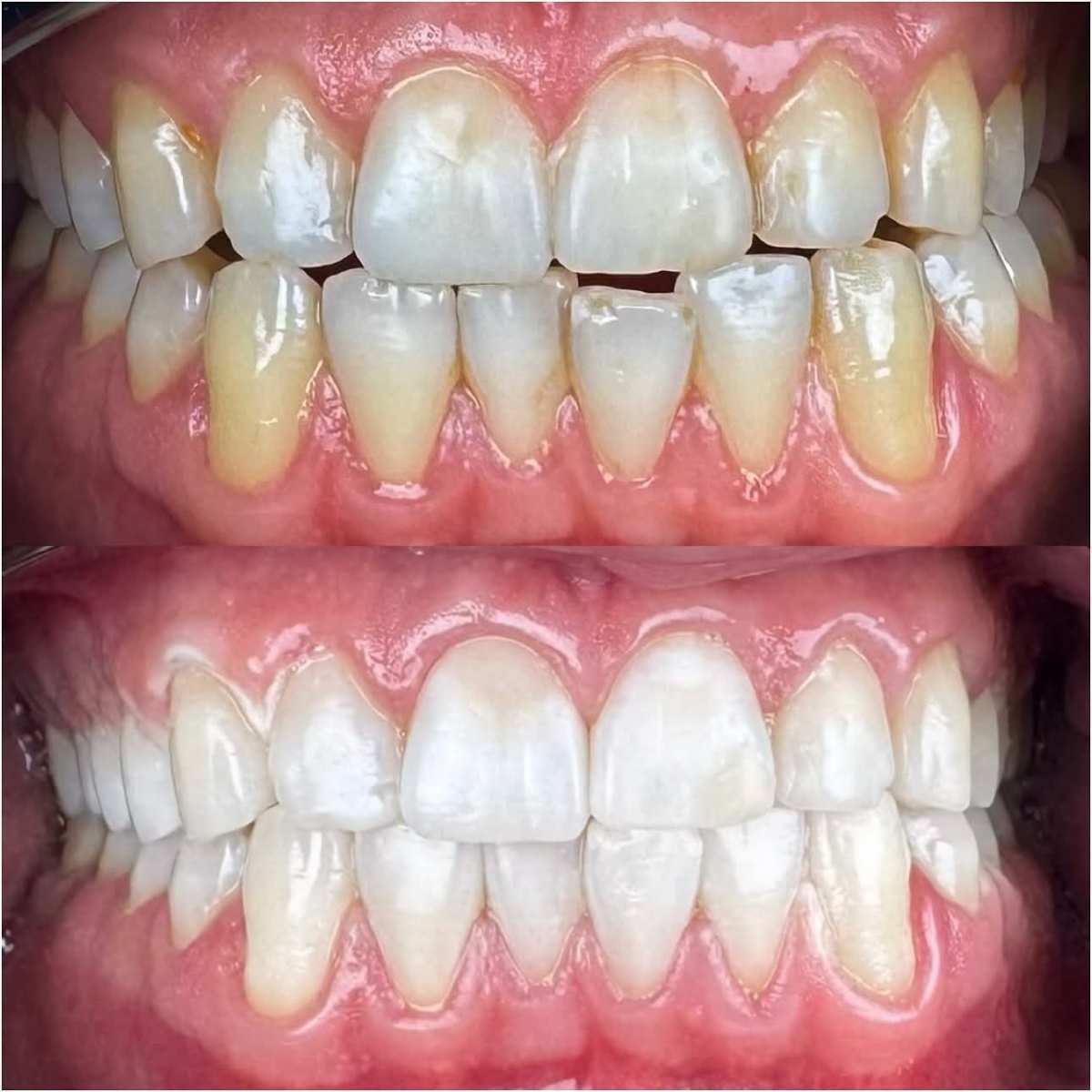
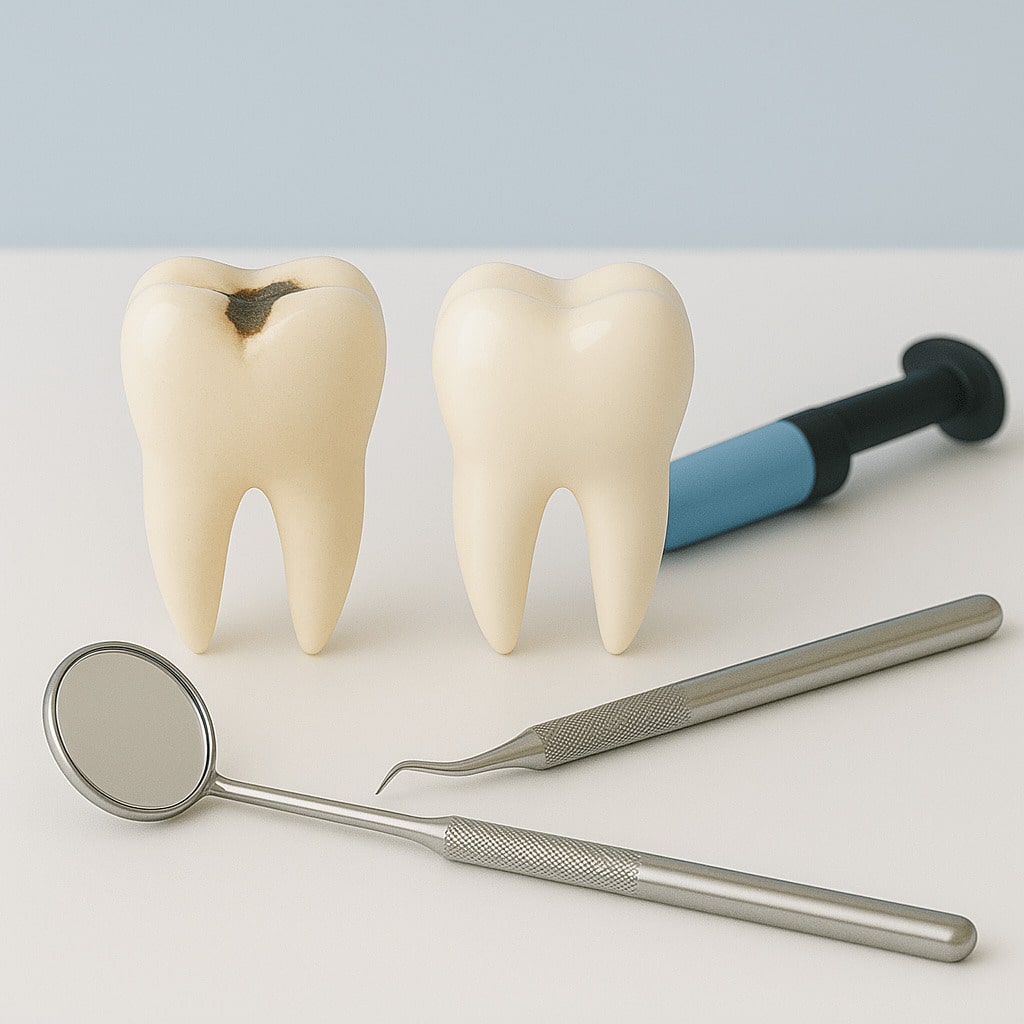
Restoration of teeth is a modern and effective set of dental procedures that can return not only full function to the teeth but also create a radiant smile. This type of restoration is also called “aesthetic” or “artistic,” because the final goal is to achieve an attractive appearance.
Problems that can be solved with aesthetic dental restoration:
- Uneven tooth shape
- Chipped tooth or destruction of more than 50% of the tooth
- Gaps between teeth
- Tooth enamel discoloration
- Caries affecting most of the tooth surface
Only a functionally and anatomically correct restoration (filling) can fully restore the function of a tooth.
Therefore, in order to return the tooth to its function, its natural structure must be recreated. If the filling has a flat surface, it will only crush the food during chewing, but there will be no proper grinding or breaking down of food. In addition, with such a filling, the chewing load applied to the tooth will be distributed unevenly — most of it will fall not on the restoration, but on the remaining natural tooth tissues, which may lead to the fracture of a tooth “wall.”
It is important to make the filling as unnoticeable as possible — to match the color of the filling to the color of the tooth and to polish the surface so that it has the same shine as natural enamel. In our clinic, we strive to use materials from reliable manufacturers with proven reputations. We always try to give our patients the option to choose the material from which their restoration will be made. Light-cured composites (“light fillings”) meet these requirements.
The cost price of high-quality light-cured composites is quite high, and the labor involved in creating such a functional and aesthetic restoration is significant. This is why well-made fillings are not inexpensive for patients.
The restoration doctors at Agat Dental Clinic offer a very interesting method of replacing a missing tooth: adhesive bridge constructions.
The advantages of this method:
- Minimal preparation of the supporting teeth, without removing the tooth nerve
- Restoration of a missing tooth in a single visit, without a laboratory stage
- Restoration of the aesthetic and functional integrity of the dental arch
- Gentle distribution of chewing load due to the absence of a metal framework
- Prevention of jawbone atrophy
- Lower cost compared to metal-ceramic bridges