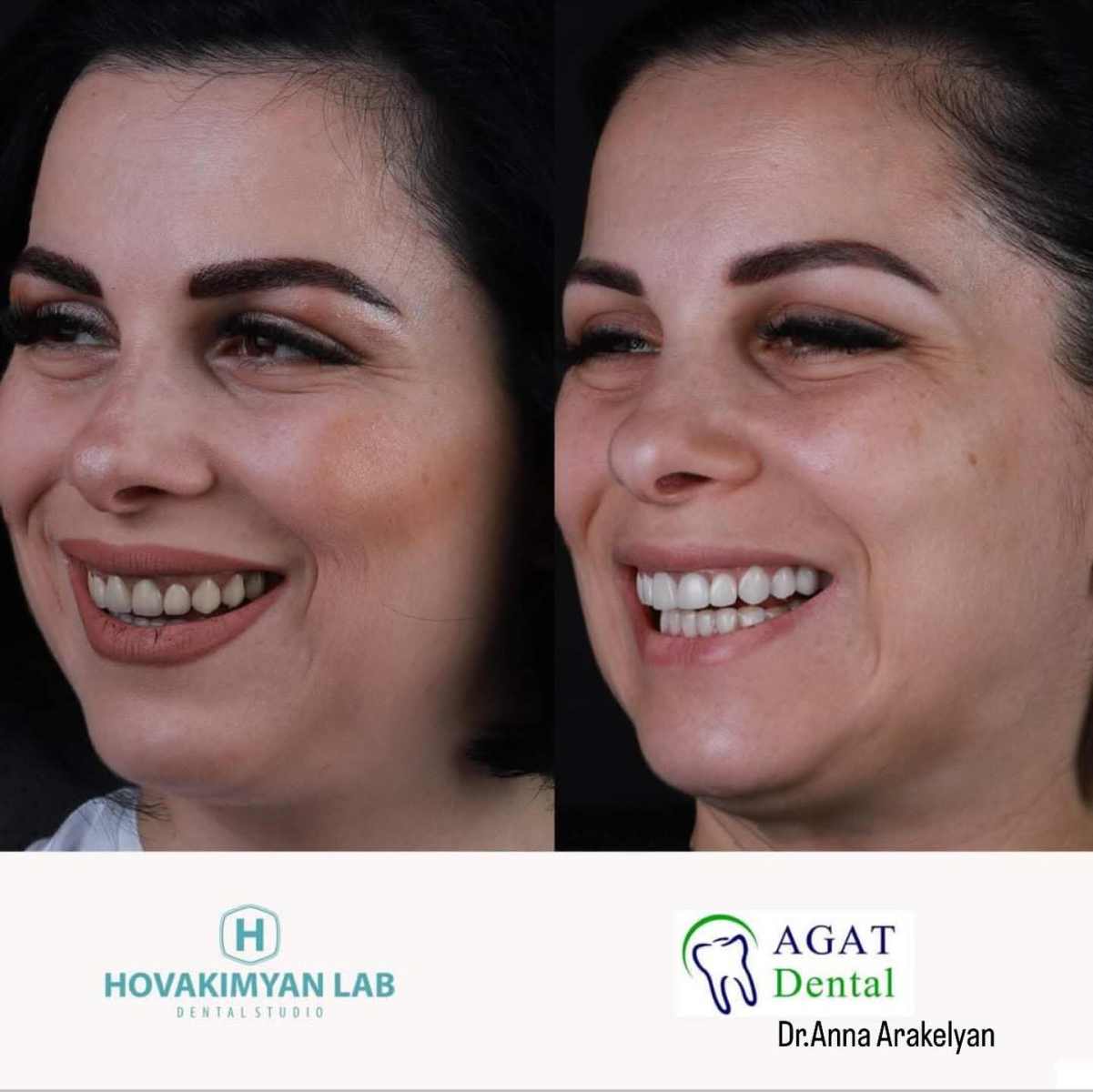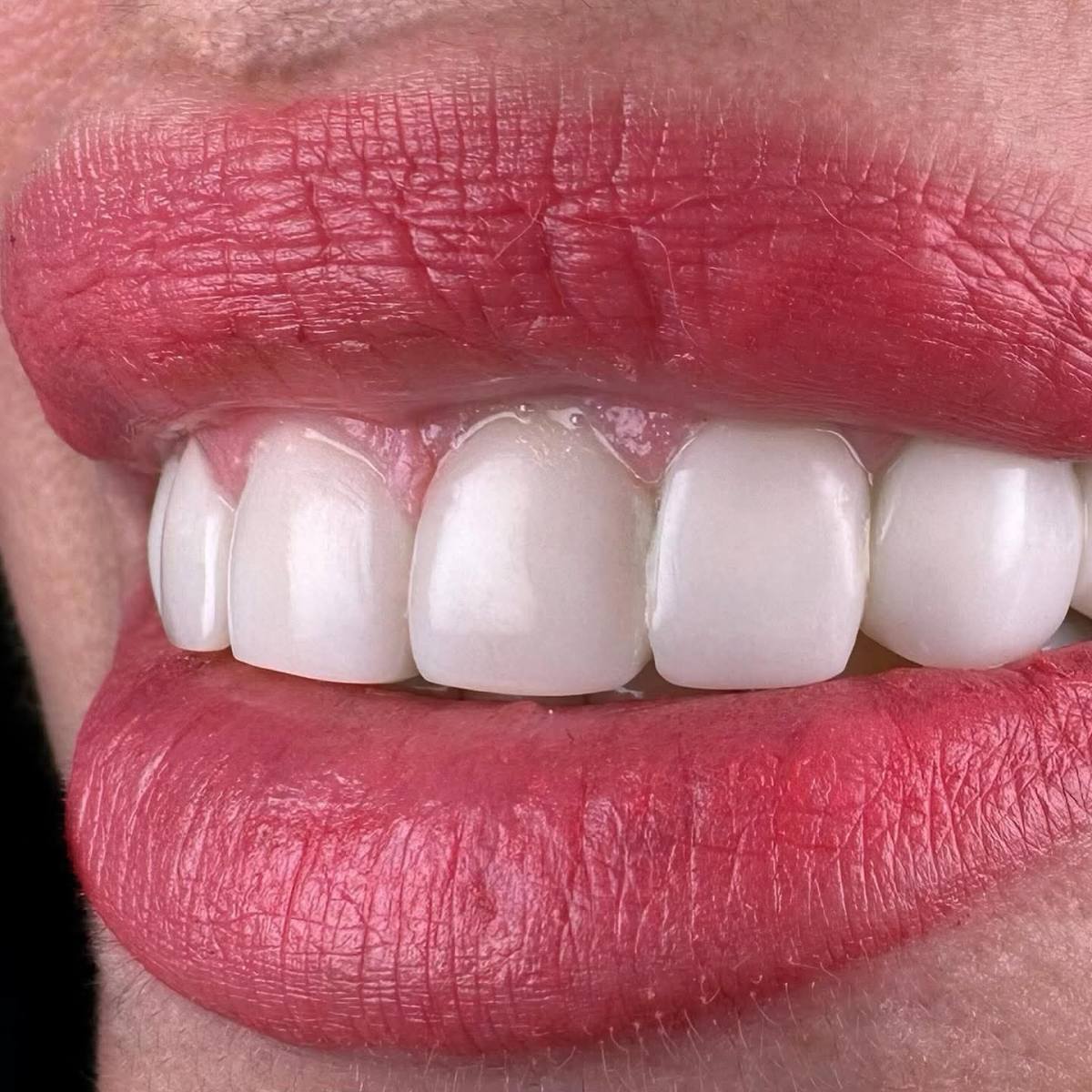
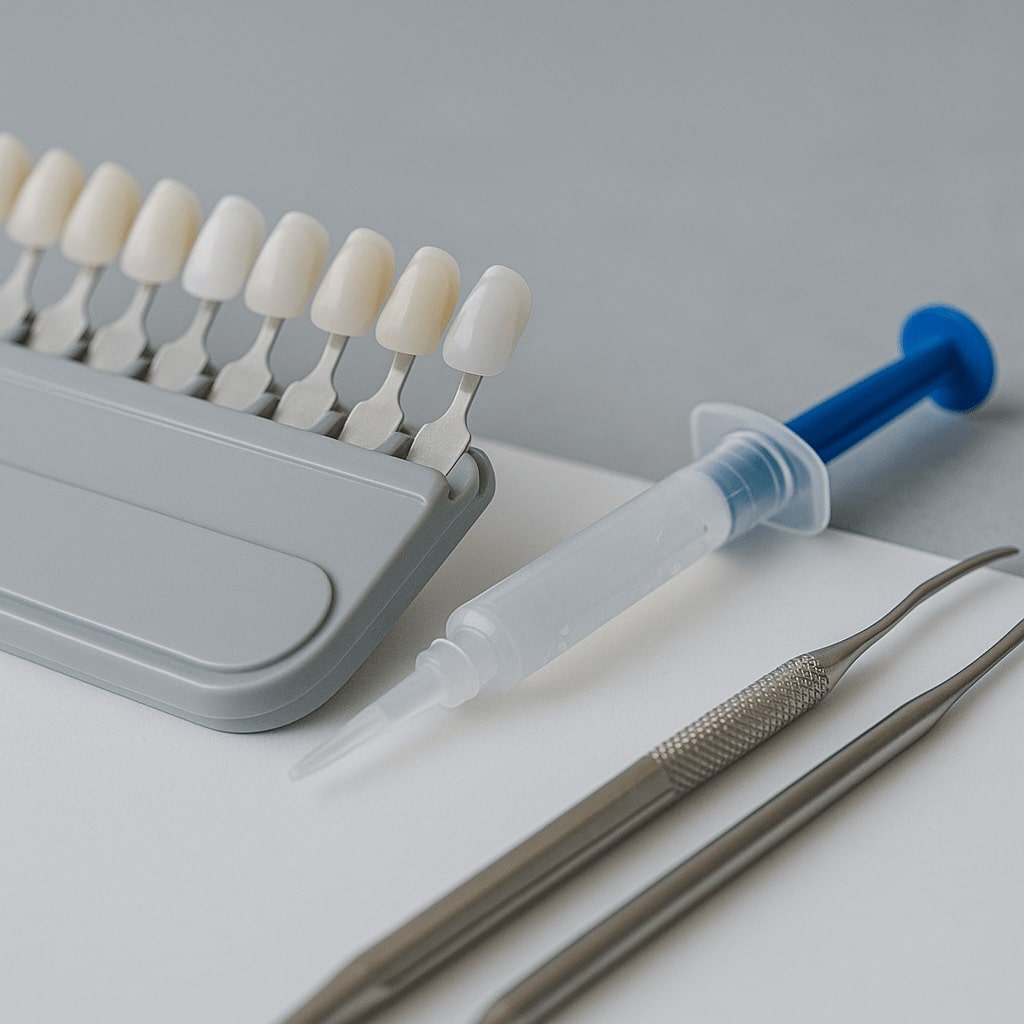
Our teeth are exposed every day to a wide variety of foods containing different coloring agents. As a result, they become yellow, lose their shine, and our smile stops being a source of admiration and pride. The optimal solution to this problem is teeth whitening. The doctors at our clinic use the popular “Ultradent” technology. It allows whitening to be performed in just one hour without discomfort for the patient. After the procedure, the teeth appear healthier and shinier.
The basis of this system is an acid-free gel that releases active oxygen, which effectively penetrates the deepest layers of the tooth enamel and successfully removes strong and persistent pigmentation. Ultradent technology does not cause any harm either to the tooth enamel or to the overall health of the patient. Moreover, a highly effective fluoride treatment performed after the whitening procedure ensures reliable strengthening of the teeth.
An important advantage of this technology used in our clinic is its long-lasting effect (from 1 to 3 years), depending on how well the patient follows the dentist’s recommendations.
Before undergoing this procedure, the patient needs to:
- Perform a hygienic cleaning of the teeth and oral cavity.
- Remove dental calculus and plaque.
- Eliminate any existing carious lesions.
- Carry out a comprehensive sanitation of the oral cavity.
Professional whitening is divided into two main groups: in-office whitening and at-home whitening under the supervision of a dentist.
At-home whitening is more time-consuming for the patient and requires daily procedures at home. It is necessary to wear special trays filled with whitening gel for several hours during the day or overnight. The duration of at-home whitening is 2–4 weeks.
Teeth Cleaning
What is professional teeth cleaning and why is it needed?
Professional oral hygiene is a dental office procedure that involves professional cleaning of all teeth. During this procedure, all types of dental deposits are removed:
- Dental calculus
- Soft dental plaque
- Pigmented dense plaque
- “Smoker’s stain,” and more
Why are dental deposits dangerous?
Dental calculus is located on the surface of the tooth at the very edge of the gum, as well as beneath the gum. It negatively affects the condition of the periodontium (that is, all the tissues surrounding the tooth).
Just like dental plaque, dental calculus is an accumulation of microorganisms. Therefore, in addition to mechanically pressing on and injuring the gums, the microbes in dental calculus cause gum inflammation, leading to the development of gingivitis.
If supragingival calculus is not removed in time, microbes penetrate under the gum, leading to the formation of periodontal pockets (pathologically deep spaces between the tooth and the gum), which results in periodontitis.
Periodontitis leads to bone loss, gum recession, and exposure of tooth roots.
In addition, common signs of periodontitis include bad breath, tooth mobility, and the accumulation of pus in periodontal pockets.
Periodontitis is a serious disease of the dental and jaw system. It can lead to tooth loss due to loosening caused by inflammation of the surrounding tissues. And as we have already established, the cause of this inflammation is dental deposits and microbial buildup. Moreover, wherever there is dental plaque — there are microbes. And where microbes accumulate on tooth surfaces, tooth decay eventually develops!
Comprehensive professional oral hygiene includes:
- Removal of hard dental deposits (“calculus”) with an ultrasonic scaler
- Removal of plaque and tooth polishing using the “AirFlow” method
- Fluoride treatment of the teeth
In our clinic, professional oral hygiene is performed only by doctors with higher medical education, not by hygiene technicians (who are mid-level medical staff). Comprehensive tooth cleaning is recommended once every 6 months. This procedure helps prevent cavities and gum disease.