
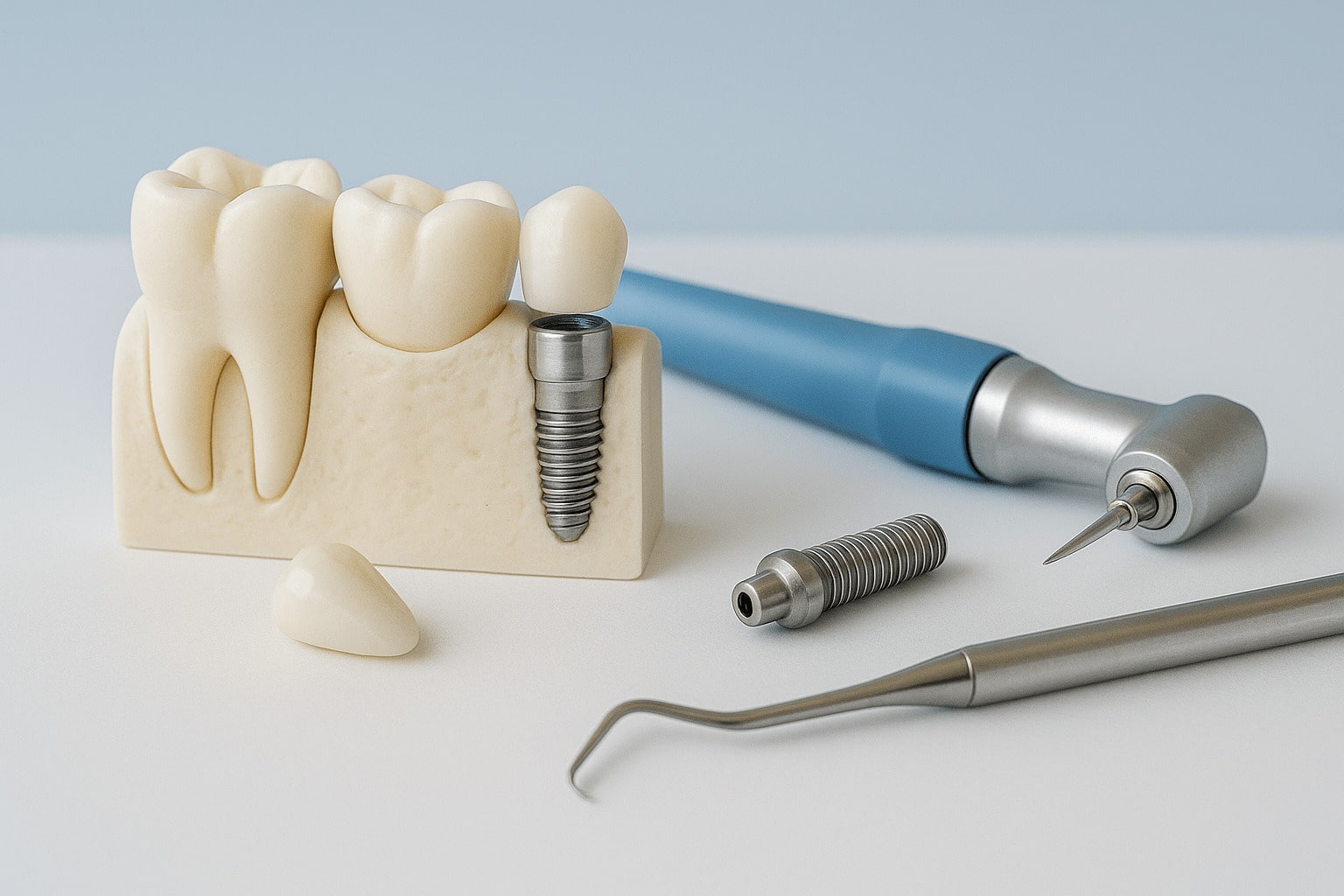
Implantation at «Agat Dental» combines modern technology, high quality, and long-lasting results. We use premium implants from leading international brands, ensuring stability, biocompatibility, and predictable treatment outcomes. With precise diagnostics and computer-guided planning, the procedure is performed quickly, safely, and with minimal discomfort. Our doctors carry out implant placement of any complexity, including cases with insufficient bone volume and immediate implantation right after tooth extraction. We apply minimally invasive surgical techniques that shorten the healing period and reduce the risk of complications. Implants fully replicate the function of a natural tooth root, and the crowns placed on them look exceptionally natural. This approach restores proper chewing function, a beautiful smile, and confidence. Every stage of the treatment is monitored carefully, and patients receive personalised guidance for comfortable and speedy healing. We support each patient from the very first consultation to final restoration and regular follow-ups. Implantation in our clinic is the perfect combination of expertise, advanced technology, and care — giving you a healthy, beautiful smile that lasts for many years.
Dental implant placement is performed in three main stages.
Stage 1 — Surgical placement
The implant is surgically inserted into the jawbone. After this procedure, a healing period is required.
Stage 2 — Abutment connection
Once the implant has healed, an abutment is attached — this small connector links the artificial tooth to the implant. At this stage, the implant begins the process of osseointegration — the gradual “fusion” of the implant with the bone. As a result, the implant becomes a strong and stable part of the jaw.
Stage 3 — Prosthetic restoration
A custom-made dental crown (prosthetic tooth) is created and securely attached to the implant system.
Thanks to this multi-step process, the final result looks and feels just like natural teeth — both in function and appearance.
Absolute Contraindications
- Diseases of the blood and hematopoietic organs. For example, impaired blood clotting makes any surgery impossible due to the risk of severe bleeding.
- Diseases of the central nervous system (both congenital and acquired). The clearest example is psychiatric disorders, in which the patient may inadequately perceive the instructions regarding behavior during and after treatment.
- Malignant tumors of various organs and systems (cancer, sarcoma). Surgical intervention may affect tumor growth and metastasis.
- Immunopathological conditions (surgical procedures always require a certain period of active and highly intensive work of the immune system to ensure normal healing of tissues after the operation).
- Systemic diseases of connective tissue. Implantation is highly demanding of connective tissue growth and development around the implant; therefore, such diseases as systemic lupus erythematosus, scleroderma, rheumatic, rheumatoid, and other similar conditions make the implant placement process impossible.
- Tuberculosis and its complications.
- Certain diseases of the oral mucosa: chronic recurrent aphthous stomatitis, lupus erythematosus, pemphigus, Sjögren’s syndrome, and others.
- Type I diabetes.
- Hypertonicity of the masticatory muscles, bruxism.


